Rodeo Drive, 1984
Rodeo Drive, 1984 is a series of 41 images of shoppers on Beverly Hills’ infamous shopping highway. The subjects appear caught unaware, glancing up as they walk, or daydreaming as they wait to be served in its commercial landscape of shops and restaurants. Anthony Hernandez poses as a dispassionate observer, recording the big hair, wide shoulders and cinched waists of the 1980’s in sunlit photographs.
Hernandez does not simply document the urban experience, but reveals in his images the complexity of social spaces, implying economic disparity and racial divide. Layers of socio-economic tension are exposed on a street in an overt symbol of civic success; as Lewis Baltz observes, “these are the victors...enjoying the spoils of their victory on Rodeo Drive”.
Working in the 1970s, Hernandez and his contemporaries, who included Lewis Baltz and Terry Wild, were interested in photographing the social landscape of Los Angeles. Hernandez work was included in a landmark exhibition, The Crowded Vacancy, at the Pasadena Art Museum, LA (now the Norton Simon Museum) in 1971, which introduced to the public a new type of American landscape photography – four years prior to New Topographics; both exhibitions inspired an aesthetic movement that continues to resonate today.
Anthony Hernandez (b. 1947) served for two years as a medic in the US Army in the Vietnam War, before taking up photography in 1969. His projects include Landscapes for the Homeless (1988-91), Waiting for Los Angeles (1996-98) Pictures for Rome (2000) and Everything (The Los Angeles River Basin) (2003-4).
Original: $92.89
-65%$92.89
$32.51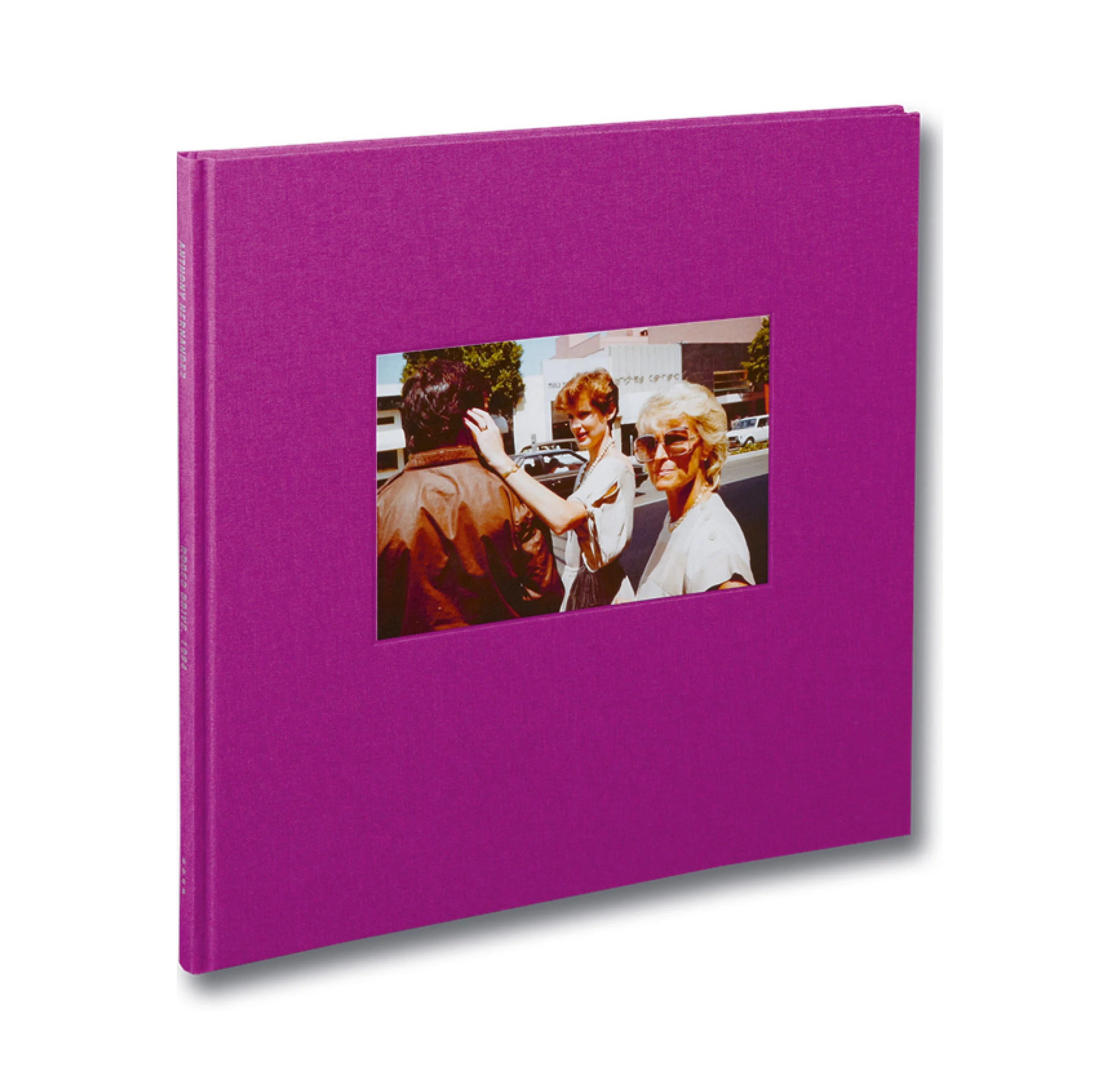
Description
Rodeo Drive, 1984 is a series of 41 images of shoppers on Beverly Hills’ infamous shopping highway. The subjects appear caught unaware, glancing up as they walk, or daydreaming as they wait to be served in its commercial landscape of shops and restaurants. Anthony Hernandez poses as a dispassionate observer, recording the big hair, wide shoulders and cinched waists of the 1980’s in sunlit photographs.
Hernandez does not simply document the urban experience, but reveals in his images the complexity of social spaces, implying economic disparity and racial divide. Layers of socio-economic tension are exposed on a street in an overt symbol of civic success; as Lewis Baltz observes, “these are the victors...enjoying the spoils of their victory on Rodeo Drive”.
Working in the 1970s, Hernandez and his contemporaries, who included Lewis Baltz and Terry Wild, were interested in photographing the social landscape of Los Angeles. Hernandez work was included in a landmark exhibition, The Crowded Vacancy, at the Pasadena Art Museum, LA (now the Norton Simon Museum) in 1971, which introduced to the public a new type of American landscape photography – four years prior to New Topographics; both exhibitions inspired an aesthetic movement that continues to resonate today.
Anthony Hernandez (b. 1947) served for two years as a medic in the US Army in the Vietnam War, before taking up photography in 1969. His projects include Landscapes for the Homeless (1988-91), Waiting for Los Angeles (1996-98) Pictures for Rome (2000) and Everything (The Los Angeles River Basin) (2003-4).